
TFT Displays
A TFT display (Thin-Film-Transistor Display) is a specific type of LCD (Liquid Crystal Display) where each individual picture element – i.e., every pixel – is controlled by its own thin-film transistor. These transistors are arranged in what is known as an active matrix. Compared to older passive LCD technologies, the TFT principle enables significantly more precise control of pixels, resulting in substantially improved image quality, higher resolutions, and faster response times.
A TFT display comprises several functional layers. Internally, a liquid crystal layer is embedded between two glass plates. On one of these glass plates are the thin-film transistors, which act as electronic switches and can precisely control each individual subpixel (red, green, blue). Furthermore, the display includes color filters, polarizing films, and a backlight – typically based on white LEDs – which provides the necessary illumination, as LCDs are not active light sources themselves.
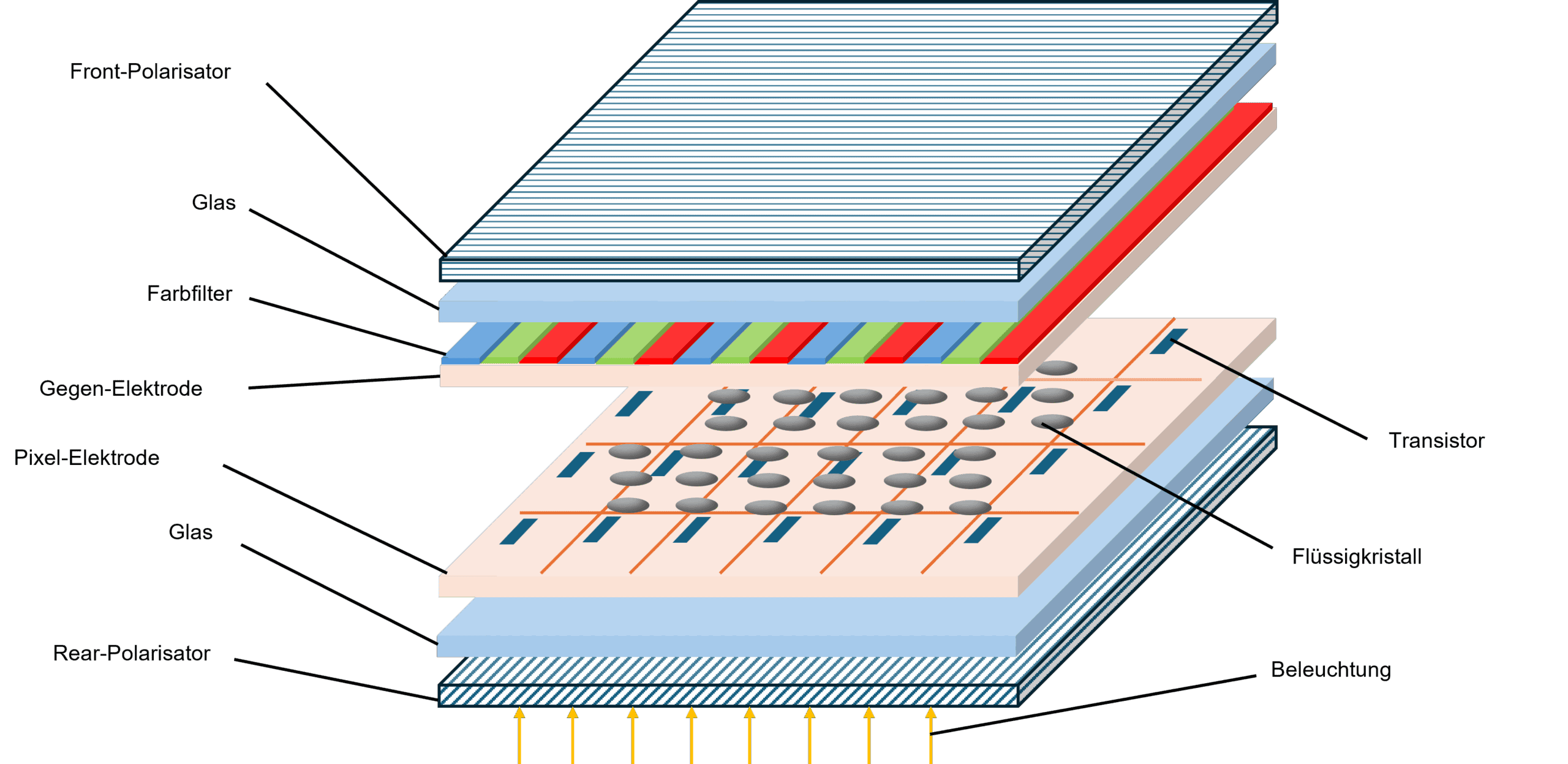
By precisely altering the orientation of the liquid crystals within each subpixel, the display can control how much light is transmitted and what color is visible at each point. This enables brilliant color reproduction and razor-sharp images – even with complex graphical content or video display.
TFT displays are utilized across various industries, ranging from consumer electronics to medical devices. In consumer electronics, they are commonly employed in televisions, laptops, and smartphones, where high image quality is essential.
In the medical sector, TFT displays are used in imaging devices such as ultrasound machines and monitors, where precise color reproduction and high resolutions are critical for diagnosis. Given that medical devices undergo complex certifications, particular attention must be paid to the long-term availability of the display.
Furthermore, they are widely used in vehicles to display information or function as touchscreens for infotainment systems. As temperatures inside vehicles can become extreme, automotive TFTs are designed for exceptionally wide temperature ranges.
TFT displays are also employed in industrial applications, such as machine controls and automation systems, where user interfaces require clear information. In these contexts, long-term availability and high resistance to challenging environmental conditions are particularly crucial.

Standard TFT Sizes
For industrial and medical technology applications, specific standard sizes for TFT displays have become established, typically ranging between 0.96 inches and 18 inches. These sizes are available from various manufacturers and often conform to standardized mechanical and electrical interfaces, simplifying replacement. The use of such standard sizes is particularly advantageous for smaller production volumes or projects without custom designs, as they offer improved availability, reduced costs, and simpler obsolescence management.
Small Sizes: 0.96″, 1.3″, 1.54″, 2″, 2.4″, 3.2″, 3.5″, 4.3″ 5.0″, 5.7″, 7″
Medium Sizes: 8.0″, 10.1″, 12.1″, 15″, 18″
Custom TFT Displays
Custom TFTs offer the flexibility to precisely adapt dimensions, form factor, and technical specifications to the requirements of a device or system. However, their implementation involves significant effort: typically, minimum order quantities of at least 10,000 units are required, and tooling costs can reach six figures. Development encompasses mechanical design, glass design, backlight customization, and potentially special interfaces or touch integration. Due to the complexity and depth of manufacturing, a longer lead time is necessary. Consequently, custom TFTs are only viable for projects with sufficiently high volume and specific design requirements.
Low-Power TFT
A challenge with TFTs is their low light transmittance, which necessitates a relatively strong backlight. This, in turn, increases power consumption. However, a selection of alternative TFT technologies is now available, making color displays feasible for an increasing number of applications. Additionally, power-efficient touchscreens are available for these applications.
Instead of a transmissive TFT, reflective or transflective displays can be utilized. Reflective TFTs harness ambient light by reflecting it via a specialized rear reflective layer. The significant advantage lies in their extremely low power consumption, as either no backlight or only a faint one is required. This technology is ideally suited for applications demanding long operating times and limited power supply, such as outdoor terminals, e-bike displays, or measuring devices.
Outdoor TFT
TFT displays for outdoor environments impose specific requirements regarding readability, robustness, and energy efficiency. Two fundamental approaches have been established to ensure visibility in direct sunlight: the use of reflective or transflective-reflective TFTs, and exceptionally bright backlights (High-Brightness TFTs).
Alternatively, transmissive TFTs with exceptionally powerful LED backlights are employed, capable of achieving brightness levels from 1,000 to over 2,500 cd/m². These displays remain highly readable even in direct sunlight while simultaneously offering excellent color brilliance and contrast. However, they necessitate careful thermal management and a stable power supply due to their correspondingly higher power consumption.
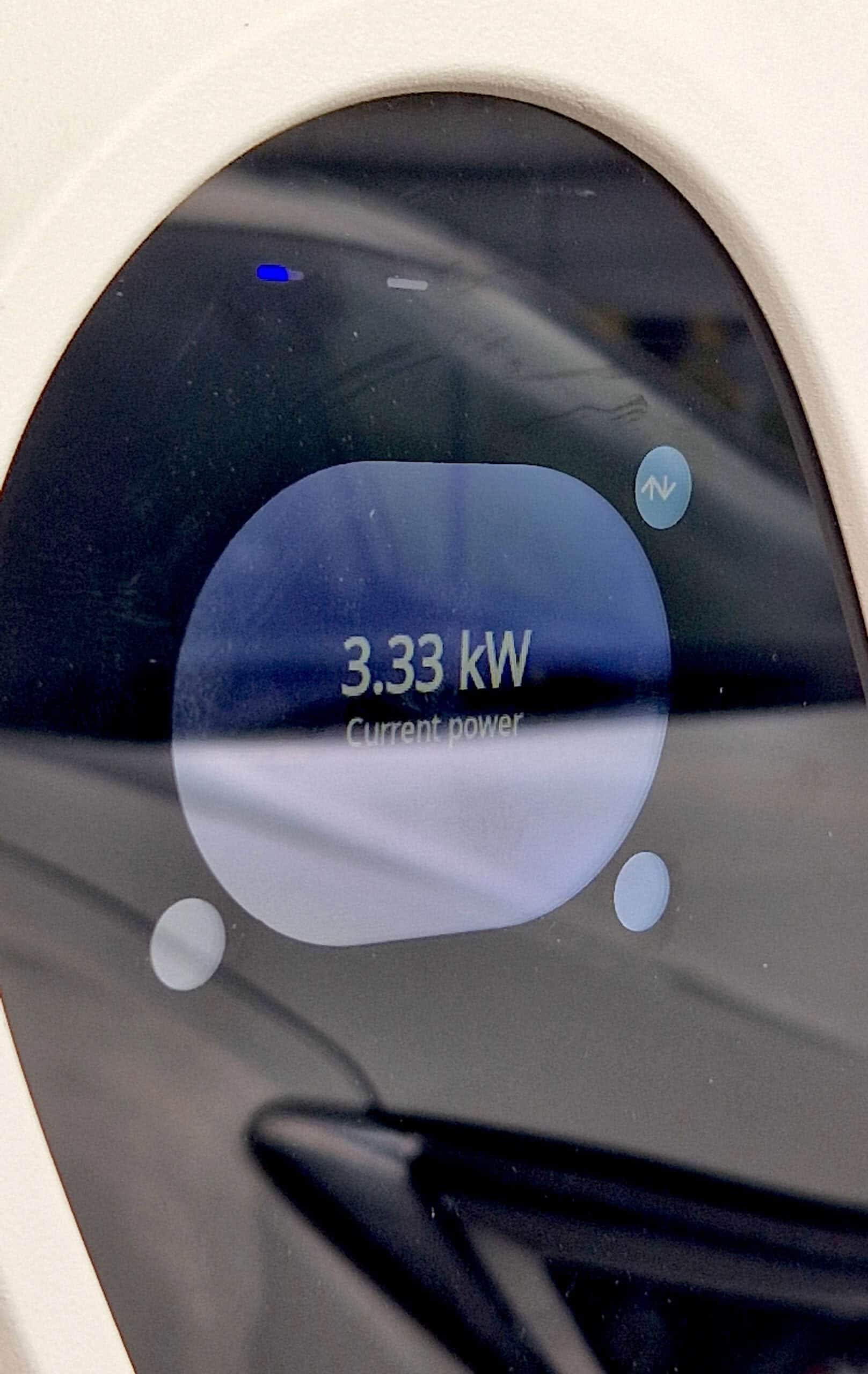
The application scenario, environmental conditions, power supply, and requirements for color and image quality are crucial factors in selecting the appropriate solution. Combinations of transflective properties and moderate backlighting can also be beneficial to balance energy efficiency and readability.
When selecting a TFT display for a technical project, numerous technical characteristics play a crucial role. These features not only influence image quality and user experience but also impact compatibility with the overall system, as well as reliability and operational lifespan.
Display Size: A fundamental criterion is the display size, typically specified in inches (diagonal). It ranges from less than 1 inch for very small modules to over 30 inches for large-format applications. The appropriate size largely depends on the intended application – for instance, a machine control panel requires a larger display than a wearable device.

Resolution: Another key characteristic is the resolution. It defines the number of pixels that can be displayed horizontally and vertically, directly impacting display quality and detail depth. Common formats include 320×240 (QVGA), 800×480 (WVGA), or 1920×1080 (Full HD). While higher resolutions allow for more detailed representations, they also increase the demands on display control and data transmission.

Interface: The choice of interface, which connects to the control unit or microcontroller, heavily depends on the display size and application. For compact displays, serial interfaces such as SPI or I²C are common due to their minimal wiring requirements. Larger displays or applications with high frame rates utilize parallel RGB interfaces, LVDS, or MIPI-DSI – the latter being prevalent in mobile devices. HDMI or eDP are also employed in multimedia systems or industrial PCs.

Color Depth: Color depth, or the number of representable colors, is also a crucial quality criterion. While basic systems operate with 16-bit color (approx. 65,000 colors), modern TFTs often offer 24-bit color depth, corresponding to 16.7 million colors – ideal for photorealistic representations or contemporary user interfaces.

Brightness: A central factor for practical usability is brightness, measured in candelas per square meter (cd/m²). Standard displays typically range from 250 to 500 cd/m². However, for outdoor use or brightly lit environments, brightness levels exceeding 800 cd/m² are recommended to ensure optimal readability.

Viewing Angle: The viewing angle also plays a significant role. While basic TN panels quickly lose contrast when viewed from the side, IPS technologies offer wide viewing angles of up to 178 degrees – a crucial factor for interactive applications or when the display is viewed from multiple directions.

Power Consumption: The power consumption of a TFT display depends on several factors – notably display size, brightness, refresh rate, and the interface used. For mobile and battery-powered applications, reflective or transflective TFT displays can also be utilized, as they do not require a backlight.

Response Time: Response time describes how quickly pixels can change their color, typically ranging from 8 to 25 milliseconds. While this is not critical for static displays, it is highly relevant for videos or animated interfaces, as an excessively long response time can lead to motion blur or ghosting.

Temperature Range: Another significant parameter is the temperature range, within which the display operates reliably. While standard modules are often specified only between 0 °C and +50 °C, industrial modules typically cover –20 °C to +70 °C. For outdoor or automotive applications, ranges from –30 °C to +85 °C, or even wider, are possible.

Lifespan: The lifespan of a TFT is typically defined by its backlight – usually exceeding 20,000 hours. A longer lifespan of up to 100,000 hours is achievable. However, we strongly recommend against continuous operation of the display and backlight; instead, utilize screensavers or temporary shutdowns to preserve the TFT and its illumination.
TFT displays offer numerous advantages that make them attractive to businesses. In recent years, this technology has established itself as a preferred solution for various applications. The combination of high image quality, full-color representation, and reduced costs makes TFT displays an excellent choice for a diverse range of applications.
| 🟢Clear Display and High Resolution TFTs provide precise display of text, graphics, or measured values – from QVGA to Full HD and beyond. The fine pixel structure enables detailed representation even on small screen sizes. | 🔴Limited Black Level and Contrast As TFTs are based on LCD technology, achieving true black is challenging – the display is never entirely "off" because the backlight remains continuously active. |
| 🟢High Brightness and Excellent Readability Thanks to powerful backlighting (often 500–1000 cd/m²), modern TFT displays are highly readable even in challenging lighting conditions. Further improvements in direct light exposure can be achieved through optical bonding, anti-reflective coatings, or transflective modules. | 🔴High Brightness Power Consumption Optimal readability in direct sunlight necessitates a powerful LED backlight, consequently increasing power consumption and thermal dissipation requirements. |
| 🟢Extensive Range of Sizes and Form Factors From 2.4″, 4.3″, 7″, 10.1″ to 15″, TFTs are available in virtually every dimension and mechanical configuration. Custom form factors, such as circular or ultra-wide designs, are also offered. | 🔴Viewing Angle Dependency (TN Technology) Economical TFTs utilizing TN panels may exhibit color and contrast shifts when viewed off-axis. Premium IPS or VA displays provide substantial enhancements in this regard. |
| 🟢Integrated Touch Functionality TFTs can be seamlessly integrated with capacitive or resistive touch panels, offering options such as multi-touch, glove compatibility, or chemical-resistant surfaces for stringent hygienic environments. | 🔴Increased Form Factor Compared to OLED The inherent architecture of TFTs, which incorporates a separate backlight unit, typically results in a thicker profile than self-emissive displays such as OLED or µLED. |
| 🟢Robust Modules for Industrial Environments Numerous TFT modules are engineered for extended temperature ranges, shock resistance, and long-term availability. Their EMC-compliant design and IP-certified enclosures facilitate seamless integration even in demanding operational settings. | 🔴Absence of Self-Emissive Property Unlike OLEDs, TFTs do not generate intrinsic light; instead, they modulate an external light source. This characteristic can diminish efficiency and color depth in specific applications. |
| 🟢Extensive Interface Compatibility Standard control interfaces include SPI, RGB, LVDS, MIPI DSI, eDP, or HDMI, making them ideal for embedded systems and panel PCs. | |
| 🟢Rapid Response Time for Dynamic Content Contemporary panels achieve response times ranging from 8–25 ms, which is ample for the majority of industrial applications, such as live data visualization, oscillography, or animated user interfaces. |
TFT displays incorporate various technologies at both the cell level and for the polarizer. These significantly influence parameters such as viewing angle stability, contrast, color representation, and light transmittance. The following section details the most common variants and their respective characteristics.
Twisted Nematic (TN)
TN (Twisted Nematic) is the oldest and most widely adopted TFT technology. It is characterized by exceptionally fast response times and high refresh rates, making it particularly suitable for gaming and applications involving rapid motion. TN displays are also cost-effective to manufacture and deliver reliable performance. However, they feature limited viewing angles and less precise color reproduction, leading to a degradation in image quality when viewed from the side or above.
In-Plane Switching (IPS)
IPS technology was developed to mitigate the limitations inherent in TN displays. It delivers highly stable and true-to-life colors, which are maintained across wide viewing angles. This characteristic renders IPS displays particularly advantageous for professional image processing and multimedia applications. They exhibit reduced susceptibility to mechanical stress and provide superior color fidelity. Drawbacks typically include a slightly elevated power consumption and, generally, slower response times, though contemporary IPS panels are progressively narrowing this performance gap. IPS has now largely become a standard technology, occasionally offering a more cost-effective solution than TN-TFTs.
Multi-Domain Vertical Alignment (MVA)
MVA is a variant of VA technology characterized by vertically aligned liquid crystals. MVA displays deliver exceptionally high contrast ratios and deep black levels, as the liquid crystals block light transmission in the absence of an applied voltage. They feature commendable viewing angles and consistent color rendition, though their response times are typically slower than those of TN displays. MVA panels are well-suited for users prioritizing high-contrast imagery and broad viewing angles over the absolute fastest response times. MVA-TFTs are now infrequently available, given that IPS technology offers comparable benefits.
Memory-In-Pixel (MIP)
A MIP-TFT is a specialized display where the acronym MIP denotes "Memory In Pixel." This architecture implies that each individual pixel incorporates an integrated memory unit, directly storing its color or brightness data275. Consequently, the display does not require continuous refreshing, but only updates when the displayed content changes. This design results in exceptionally low power consumption, rendering MIP displays highly suitable for battery-operated devices such as smartwatches, wearables, or measurement instruments.
Transmissive TFTs
Transmissive TFT displays utilize a translucent rear polarizer and active backlighting to enable image rendering. This provides high brightness and strong contrast, which is particularly advantageous indoors or in low-light conditions. However, they consume more power and are often difficult to read in very bright ambient light, such as direct sunlight.
Reflective TFTs
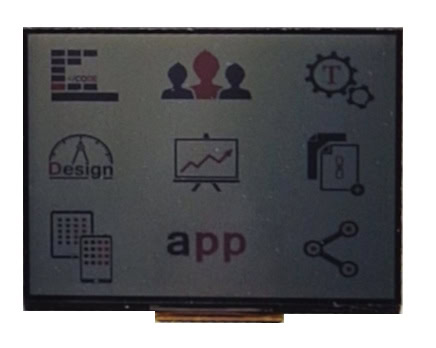
Reflective TFTs (also known as retro-reflective displays) operate without a backlight, instead utilizing ambient light that is reflected by a specialized reflective layer. This design renders them highly energy-efficient and particularly suitable for battery-powered devices. However, their optimal performance is contingent upon adequate ambient illumination, making them challenging to read in dimly lit environments.
Transflective TFTs
Transflective TFTs integrate the benefits of both technologies: they feature a semi-transparent reflector that simultaneously reflects ambient light and transmits light from the backlight unit. This dual functionality ensures excellent visibility in both bright sunlight and darkness, while conserving energy when the backlight can be deactivated. These displays are commonly deployed in mobile devices subjected to diverse lighting conditions.
Over recent years, TFT technology has solidified its position as the preferred display solution within industrial and medical sectors, particularly owing to its superior image quality, long-term availability, and inherent robustness. The subsequent sections will present a comparative analysis of TFTs against various alternative display technologies.
TFT Displays vs. LCD
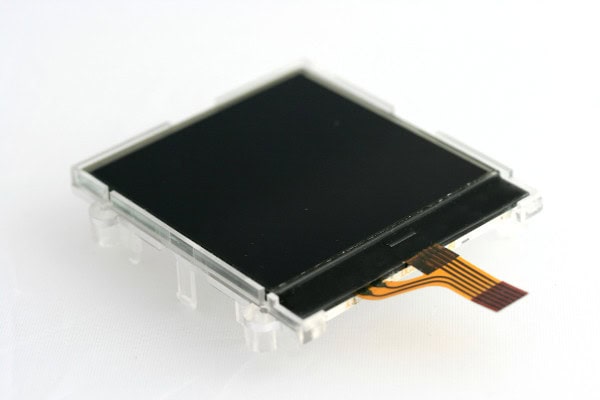
TFT displays are a specialized form of LCD displays controlled by thin-film transistors. While conventional LCDs utilize a passive matrix, TFT displays enable active matrix control, resulting in faster response times and superior image quality. A crucial advantage of TFT displays is their capability for more accurate color reproduction and faster image transitions. This is particularly beneficial for applications requiring the display of rapid movements, such as in video games or film playback. Furthermore, TFT displays offer a higher contrast ratio than many standard LCDs, enhancing visibility in varying lighting conditions. Additionally, the compact dimensions of TFT displays make them ideal for mobile devices and portable technologies where space is often limited.
TFT Displays vs. AMOLED
AMOLED (Active Matrix Organic Light Emitting Diodes) displays offer excellent contrasts, vibrant colors, and very fast response times because each pixel emits its own light, eliminating the need for a backlight. This makes them particularly attractive for high-end mobile devices and modern HMI applications demanding superior image quality. In comparison, TFTs are significantly more cost-effective to manufacture and offer better long-term availability, as their production infrastructure is more widely established and they are used in many industrial standards. AMOLEDs are also subject to a higher degradation process – particularly with blue OLEDs – which can limit their lifespan in certain applications. TFT displays benefit from a longer lifespan and are less susceptible to image burn-in, making them especially suitable for industrial and professional applications.
TFT Display vs. E-Paper
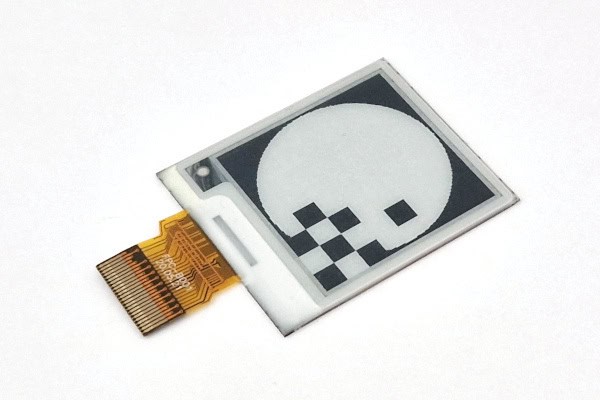
TFT displays and Color E-Paper fundamentally differ in their construction and application. TFTs (Thin-Film Transistor) offer high resolution, brilliant colors, and fast response times, making them ideal for applications with dynamic graphics and videos – e.g., in industrial facilities, medical devices, or consumer electronics. They require a backlight, which increases power consumption. Color E-Paper, on the other hand, does not require backlighting and utilizes ambient light for display, making them particularly power-efficient – ideal for long-duration devices such as e-readers, signage, or IoT displays. However, their response time is slower, and color reproduction is limited. The choice heavily depends on the application, desired brightness, control requirements, and energy consumption.
The usability and integration of the TFT display into existing systems are also critical factors. A display should not only be technically capable but also user-friendly and seamlessly integrable into your current processes. When selecting a display, companies should consider whether additional features such as touchscreen technology or interfaces like HDMI or USB are available. These functionalities can enhance interactivity and improve the user experience. Compatibility with software solutions such as HMI (Human-Machine Interface) is also an important aspect to consider during selection.
EMC
When integrating TFT displays into products, meticulous planning is crucial, especially concerning EMC (Electromagnetic Compatibility). TFTs are typically driven via interfaces such as LVDS, HDMI, or SPI and generate high-frequency signals that can cause interference or affect sensitive components. Therefore, clean routing, shielded cables, a proper grounding concept, and, if necessary, filter components are essential. Additionally, the display control should be integrated into the overall EMC concept of the device at an early stage to avoid rework in later development stages. This approach ensures stable and compliant integration.
Touchscreen
Many TFT displays can be combined with a touch panel, with various technologies suitable for different applications. Resistive systems respond to pressure, are robust, and can be operated even with gloves – ideal for industrial or medical devices. Capacitive touch panels (PCAP), on the other hand, offer a modern glass aesthetic, support multi-touch, and provide precise control. In addition to resistive and capacitive touch technologies, other systems exist for specific requirements, such as SAW (Surface Acoustic Wave) touch, infrared touch, optical touch, and EMR (Electromagnetic Resonance) systems. Each technology brings specific advantages for various application areas.
Integration can occur directly within the TFT module (e.g., via optical or air bonding) or as in-cell touch, offering design flexibility. Coordinated control, appropriate interfaces (e.g., I²C or USB), and consideration of EMC are important to prevent interference and ensure reliable operation.
Graphical User Interface
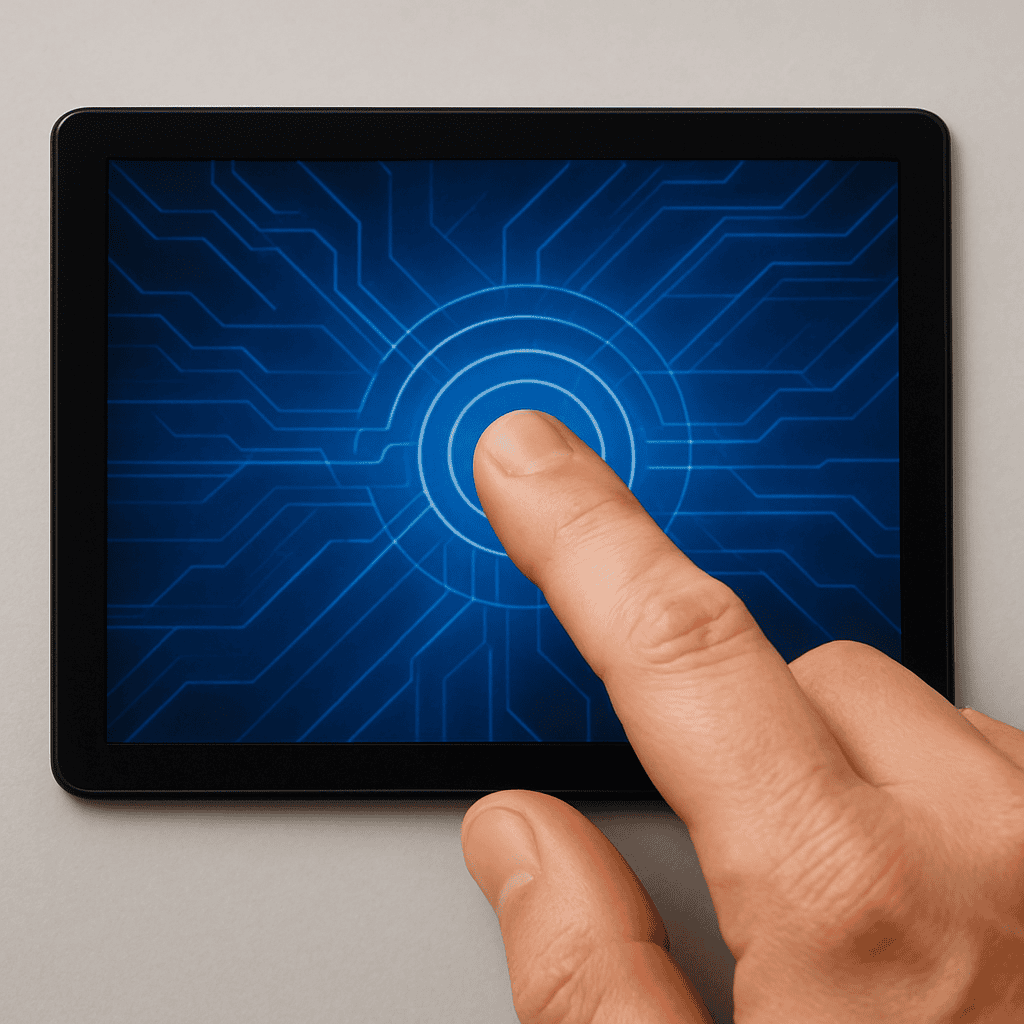
Graphical User Interfaces (GUIs) for TFT displays enable intuitive device operation and are a central component of modern HMI applications. The development of such GUIs begins with defining resolution, color depth, and user interaction – for instance, via a touch panel. Depending on the controller used, implementation occurs with or without an operating system: For microcontrollers, libraries such as LittlevGL (LVGL) or TouchGFX are often employed, specifically optimized for resource-efficient rendering on smaller LCDs. For more complex applications with Linux or Android, frameworks like Qt or Flutter are available. Efficient utilization of memory and processing power is crucial for fast response times and smooth graphic rendering. Consideration of display characteristics such as brightness, contrast, and backlight is also important to ensure GUI readability under various lighting conditions.
Mechanical Integration
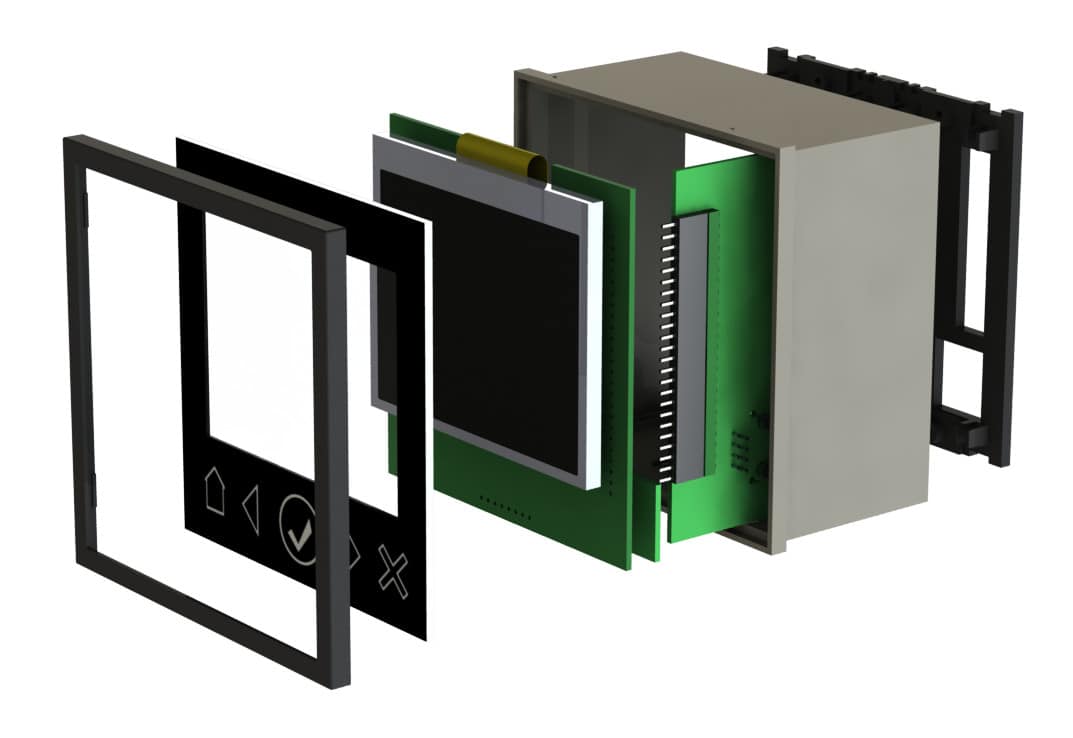
The mechanical integration of TFT displays into products requires precise adaptation to the housing, mounting points, and front glass. Stable mounting brackets and consideration of IK, IP, and UV protection are important to minimize mechanical stress and environmental influences – particularly in industrial or automotive applications. The correct positioning of the backlight and adequate heat dissipation are crucial for the display's lifespan and brightness. Furthermore, the arrangement of the touch panel, protective glass, and display module should be optimized for readability and light transmission. A mechanically sound integration significantly contributes to the overall system's functionality and reliability.
Interfaces
TFT displays can be driven via various data interfaces, each presenting specific advantages and disadvantages concerning resolution, response time, power consumption, and system complexity. For compact color displays with screen diagonals up to approximately 4 inches, serial interfaces such as SPI or I²C are suitable. These require only a few lines and facilitate straightforward integration into existing systems; however, they come with a limited data rate, which restricts the display of high-resolution graphics or rapid image changes.
For larger screens or applications demanding high image quality, advanced display technology, or superior performance, parallel interfaces such as RGB, LVDS, MIPI-DSI, or HDMI are employed. These interfaces support higher resolutions, faster refresh rates, and enable precise color representation with reduced latency. They are particularly well-suited for demanding industrial applications, HMI systems, or portable devices equipped with touch panels.
The selection of the optimal data interface depends on several factors, including the display's size and structure, the required image quality, the available control electronics, energy efficiency, and the intended operating environment. A well-conceived interface concept significantly contributes to the display's optimal functionality and overall system energy savings.
The further development of TFT displays focuses on higher resolutions, improved brightness, lower power consumption, and more flexible form factors. Advances in oxide TFTs (e.g., IGZO) and LTPS technologies enable thinner designs, faster response times, and more precise graphic rendering. The integration of touch and sensor functionalities directly into the display module is also progressing. In the industry, the focus is also on more robust LCDs with extended lifespans, improved EMC compatibility, and prolonged availability for long-life devices. Concurrently, transparent, round, and flexible TFTs are gaining importance – for applications such as wearables, automotive displays, or novel HMI concepts.
Sustainability and Energy Efficiency
The ongoing development of TFT displays increasingly focuses on sustainability and energy efficiency. Modern TFT modules incorporate power-saving LED backlighting, adaptive brightness control, and optimized control electronics to significantly reduce power consumption – a critical aspect for mobile or battery-powered devices featuring integrated color displays.
Concurrently, there is an increased emphasis on durable components and more environmentally friendly materials – for instance, through the reduction of hazardous substances in compliance with RoHS or the utilization of recyclable modules. Enhancing longevity through more stable liquid crystals, robust structures, and resilient housing materials also significantly contributes to sustainability. This is particularly relevant in industrial applications where an extended product lifecycle is crucial.
Future developments in display technology also focus on intelligent data interfaces that not only enable high resolutions and fast response times but also ensure energy-efficient data transmission. Consequently, modern displays are becoming not only more powerful but also more resource-efficient in operation.
Long-Term Availability
When selecting TFT displays, obsolescence and long-term availability play a pivotal role, especially in industrial and medical applications with extended product lifecycles. Recommended strategies include second-source concepts, compatible successor models, and inventory stocking to ensure supply. Early involvement of the display supplier in project planning is also important to identify technical changes – such as in backlighting, sizes, or control electronics – promptly and evaluate alternatives. This approach can significantly reduce risks associated with discontinued displays or components.
Many TFT displays are available today from multiple manufacturers in common sizes such as 3.5″, 4.3″, 5″, 7″, or 10.1″, often with comparable resolution, interface, and mechanical construction. This standardization facilitates subsequent substitution in cases of obsolescence or supply bottlenecks. Therefore, it is advisable to consider common formats, broad availability, and standardized interfaces during display selection and design. This ensures that a subsequent migration to alternative modules can be achieved with minimal adaptation effort – a decisive advantage for long-life devices and series products.
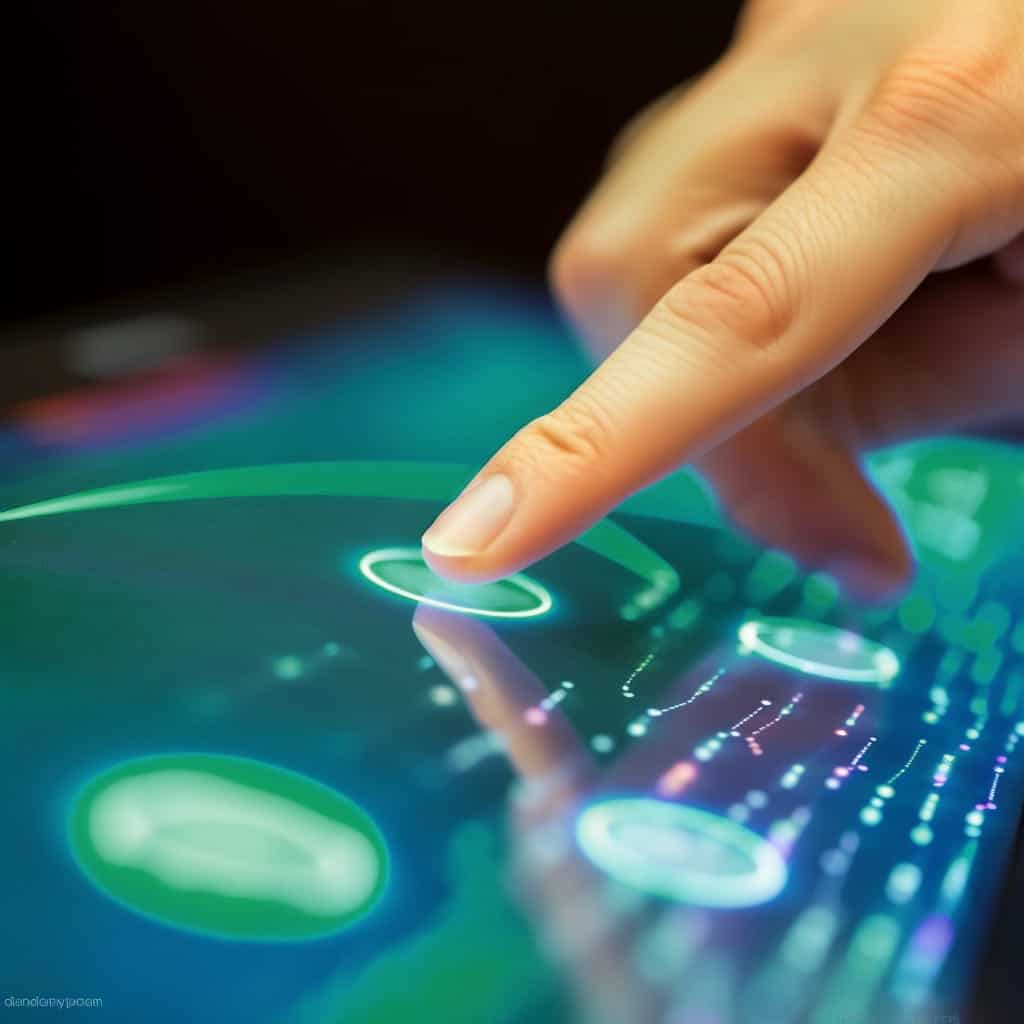
TFT modules are available in various sizes, ranging from tiny 0.96-inch formats to large-format LCD displays for complex user interfaces. Optionally available with an integrated touch panel, enabling direct control – ideal for interactive devices and modern HMIs.
As an experienced manufacturer and partner for customized solutions, we understand what is crucial. A TFT display performs particularly well in combination with additional elements. This ranges from a sophisticated graphical user interface, which can incorporate significantly more complex graphics due to higher resolution, to integration into the final product with the aid of front glass and an integrated touch panel. The development and required hardware are correspondingly complex, a factor that must also be considered when transitioning from passive LCDs to TFTs.