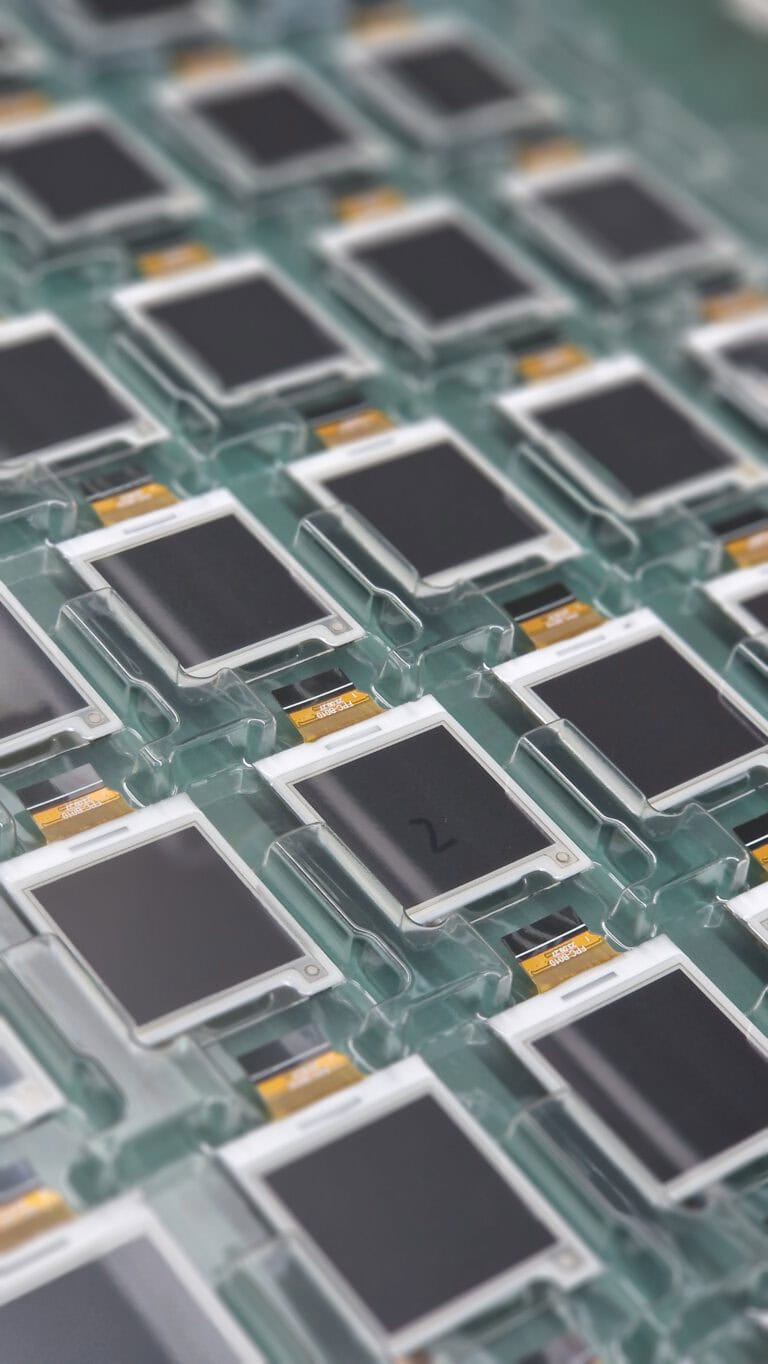

E-Paper displays have been established for years as a power-efficient and eye-friendly display technology – especially where content is displayed statically and excellent contrast is required. However, the technology has historically suffered from a significant drawback: slow refresh rates.
This is now changing. Thanks to technical advancements, fast-switching E-Paper displays are now available, capable of updating in 2- or 3-color versions within a few hundred milliseconds – thereby paving the way for new application fields.
What is new?
With conventional E-Paper Displays (EPD), such as those used in e-book readers, an image change often takes several seconds – especially for multi-color panels where pigmented particles must be driven sequentially.
The new “Fast Update” technologies for two-color EPDs drastically reduce refresh times. This is made possible by:
- Optimized driving algorithms,
- improved pigment formulations with lower viscosity,
- and adapted driver ICs that generate more precise field pulses.
Result: Simple graphics, texts, or alternating displays can now be switched virtually in real-time – without the familiar “flickering” or ghosting.
Response Times at a Glance: Full-Screen and Partial-Screen Updates
The actual switching speed of E-Paper displays heavily depends on the number of colors, the display format, and the update method. Modern fast-switching displays now offer significantly reduced times, especially for 2- and 3-color variants.
Full-Screen Update (Full Update)
| Display Size | 2C (Black/White) | 3C (Black/White/Red) | 4C (e.g., SWRG) |
|---|---|---|---|
| 1.54″ | ~450 ms | ~3–5 s | ~8–10 s |
| 2.9″ | ~600 ms | ~4–6 s | ~10–12 s |
| 4.2″ | ~800 ms | ~6–8 s | ~12–15 s |
| ≥7.5″ | ~1–1.2 s | ~8–10 s | >15 s |
Note: 4C versions (e.g., Black, White, Red, Yellow) typically require multiple passes for color rendering, which extends the update time.
Partial Update
| Display Size | 2C (BW) – partial | 3C (BWR) – partial |
|---|---|---|
| 1.54″ | ~120–180 ms | ~1–1.5 s |
| 2.9″ | ~150–200 ms | ~1.5–2 s |
| 4.2″ | ~250 ms | ~2–2.5 s |
| ≥7.5″ | ~300–400 ms | ~3 s |
Partial updates are primarily optimally utilized with black and white displays. While possible with 3C, they may result in artifacts or reduced color stability.
These values are typical reference figures and may vary depending on the manufacturer, controller, and selected driver profile. For time-critical applications, the selection of a two-color e-paper display is recommended.
Possible Applications
Thanks to shorter switching times, new application areas are emerging for E-paper displays:
- Dynamic signage that is updated multiple times per minute
- Status indicators on machines, e.g., “OK / Error” or “In Operation / Maintenance”
- Interactive information displays with low power consumption and only a momentary need for rapid switching
- Time measurements with second-level indication
- Logistics and warehousing with dynamic storage location or order displays
Especially where energy efficiency, passive readability, and maintenance-free operation are required, yet a certain level of dynamism is necessary, these new EPDs offer an attractive alternative to TFT or OLED displays.
Limitations
Even though switching speed has been significantly improved, physical limitations still persist:
- No full-color representations as with TFTs or OLEDs
- Limited contrast and color saturation
- Temperature dependency under very cold conditions
- Energy efficiency typically relies on infrequent image updates; constant switching drives up power consumption.
They are not suitable for real-time video or complex graphical user interfaces – but they are well-suited for information displays with changing states.
Recommendation
Fast-switching E-paper displays mark a turning point for the technology. With significantly reduced response times for two- and three-color modules, their application possibilities extend beyond traditional price tags or e-readers. Those who prioritize power efficiency, readability, and minimal maintenance will find a highly interesting solution here – even for more dynamic applications in industrial environments, provided the application requirements (especially temperature range) are met.