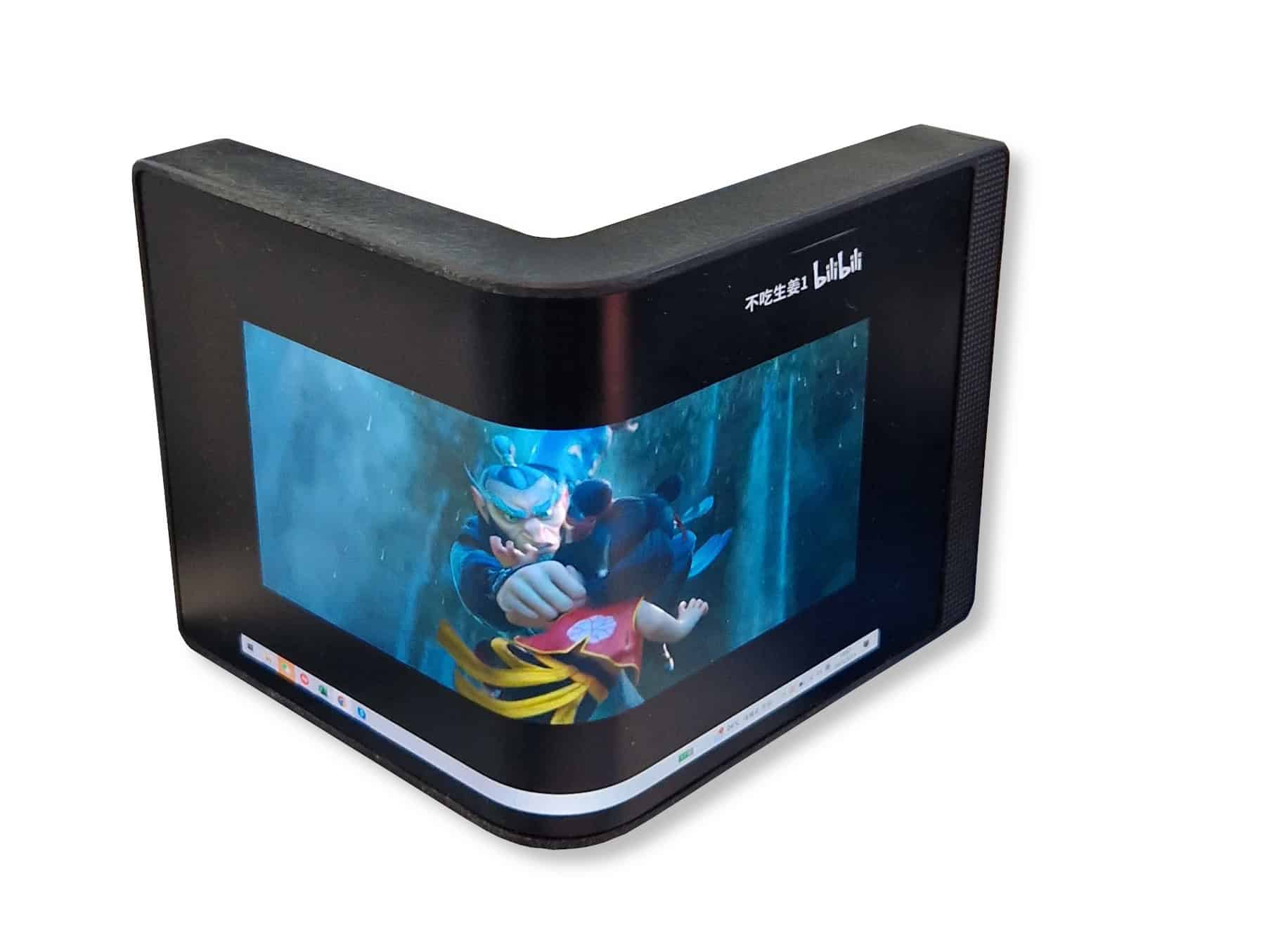
Curved TFT displays not only offer a futuristic design but also enable improved ergonomics and a more immersive visual experience – especially in large-format display systems such as monitors, automotive displays, or specialized industrial applications. However, the elegant curvature conceals significant technological and logistical complexities.
Technological Specifics
TFT displays are based on brittle substrates – typically glass. Bending this material during the production process presents a significant challenge. While OLEDs can be relatively easily curved due to their flexible substrate materials (e.g., PI film), curved TFTs require consideration of specific challenges, such as:
- Mechanical stresses within the TFT cell and touch panel
- Formed glass substrates (thermally shaped after the TFT process)
- Backlight illumination distribution, which can become uneven with curvature
- Uniform liquid crystal layer thickness: In curved TFTs, curvature can lead to variations in cell gap thickness, complicating the homogeneous alignment and control of liquid crystals – with negative effects on contrast, color stability, and viewing angle.
- Adaptation of polarizers, touch sensors, and backlight to the curvature
The manufacturing of these curved modules necessitates precise mechanical tolerances and extensive quality controls, as even minimal deviations can lead to leakage currents or failures.
Availability of Standard Models
Currently, curved TFTs are not available as standard products on the market. Unlike classic form factors such as 3.5 ”, 7 ”, or 10.1 ”, curved variants are exclusively available as custom solutions. Manufacturers offer these displays only in larger quantities or within the scope of OEM projects. The reasons for this include:
- High Development Effort
- Limited Demand in Standard Applications
- Need for Specific Customizations (Interface, Housing, Touch Design)
Conclusion
Curved TFT displays are technically feasible but are associated with significant limitations regarding mass production and standard availability. They are primarily suitable for projects with defined design requirements and corresponding production volumes. Those intending to integrate a curved display into a product should collaborate early with a specialized manufacturer or module house to optimally coordinate design, manufacturing, and EMC aspects.