Problem Statement
When using night vision devices, light sources, including control elements such as LCDs and TFTs, must normally be switched off. Otherwise, users may be blinded, and the sensitivity of image intensifiers can be degraded by bright light sources. Some light leaks are so severe that they wash out the NV image, while others may cause a less obvious degradation of the image. Subtle impairments, such as minimal glare or blooming in the NV image, can obscure terrain features or obstacles that would otherwise be visible.
The simplest solution, merely dimming a display sufficiently, has the drawback that nothing would be legible without a night vision device.
Technical Description
Modern night vision devices respond only to a restricted wavelength range due to integrated band-pass and low-pass filters. Illumination outside this range can therefore be safely used.
However, with light amplification factors of 30,000 – 50,000x, the filters must be very narrow-band and high-contrast.
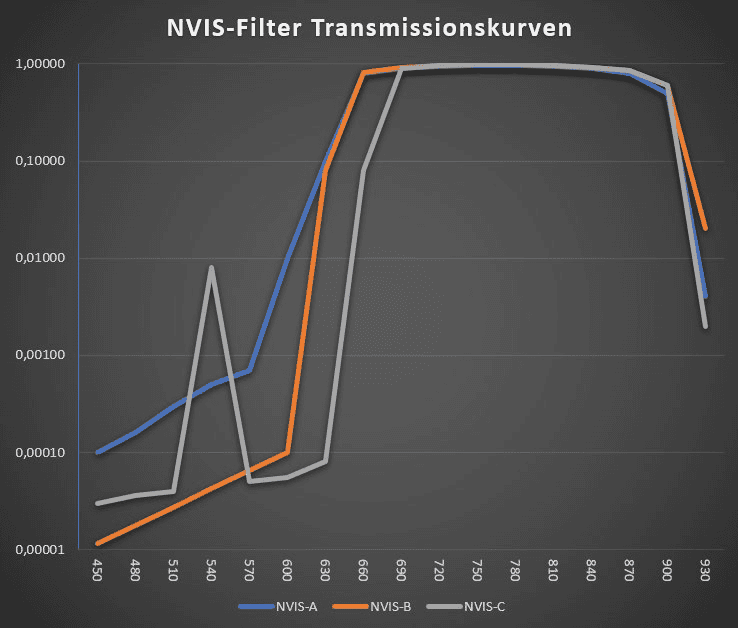
Figure 1: NVIS Filter Transmission Curves (A. Wenger)
Three distinct filter types are identified:
NVIS-A, also known as Minus Blue, is a filter that blocks wavelengths below 625nm. This means that only blue/green colors can be used for illumination. Consequently, the display can only produce a very limited monochrome representation.
NVIS-B: A filter with a cut-off at 665nm. This allows for the display of blue, green, yellow, and orange colors. However, white cannot be mixed.
NVIS-C: A filter with a cut-off at 670nm, which permits nearly the full color spectrum. Additionally, the filter features a small transmissive band at 540nm, enabling the TFT to be read even when wearing NVIS goggles.
The apparent advantage of B/C versions, which allows for the use of more colors, is simultaneously their disadvantage. The night vision device becomes significantly less sensitive due to the broader filtered wavelength range.
NVIS Display Solution from LCD Microelectronics
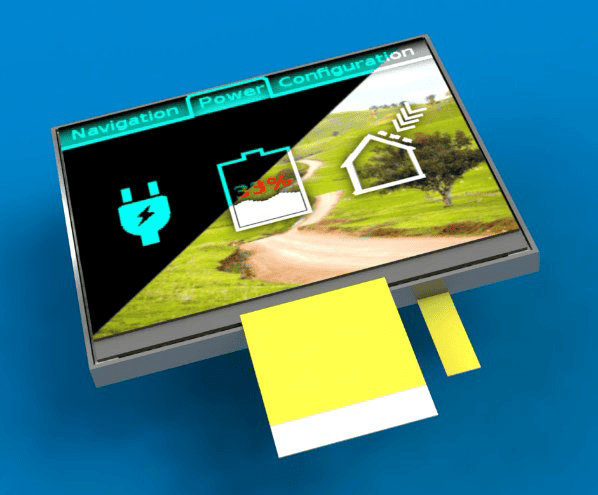
Figure 2: NVIS Display Illustration (A. Wenger)
Our displays can be adapted to various requirements, both modularly through the selection of filter and illumination combinations used, and dynamically by switching the integrated multispectral illumination.
The multi-layered illumination system can generate both the high brightness required for daylight operation and the specifically tuned wavelengths for various NVIS filters at reduced brightness.
By means of an additional NVIS-B/C filter disc, a colored night vision mode can also be achieved.
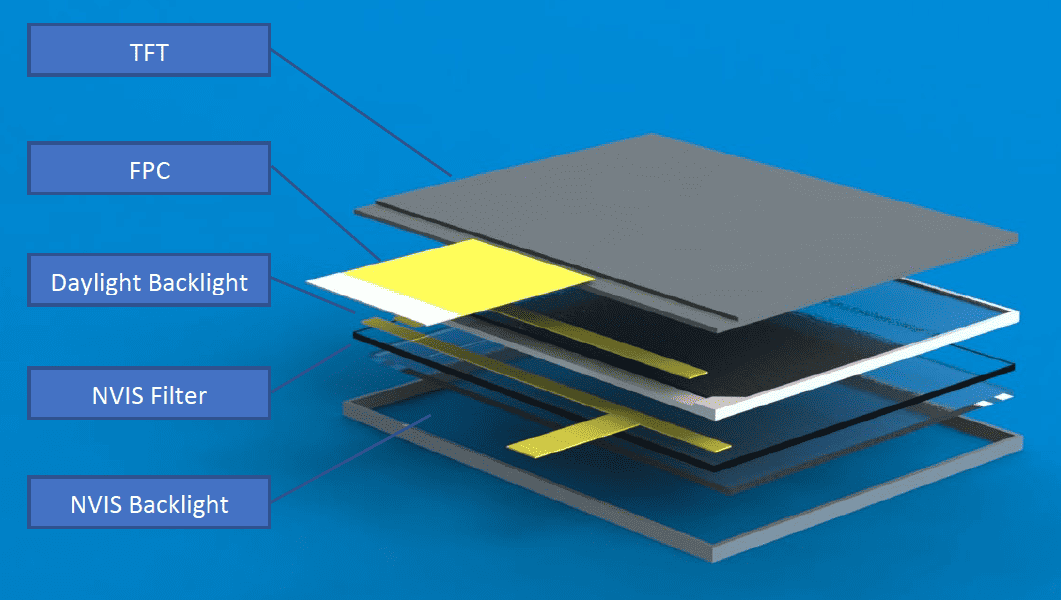
Figure 3: NVIS-TFT Structure (A. Wenger)
Sources
- MIL-STD-3009 / LIGHTING, AIRCRAFT, NIGHT VISION IMAGING SYSTEM (NVIS) COMPATIBLE / 2.2.2001
- ACCURATE MEASUREMENT OF NVIS LIGHTING COMPONENTS Craig J. Coley, The Communications Repair Depot April 2006
- European Aviation Safety Agency / Acceptable Means of Compliance (AMC) and Guidance Material (GM) to Annex V – Part-SPA / 9.9.2015
- Flight Safety Foundation / Basic Aviation Risk Standard Implementation Guidelines / 5.5.2014