What is the difference – and when is each panel advantageous?
RGB panels (Red-Green-Blue) are based on the conventional principle: Each pixel consists of three subpixels, each transmitting red, green, or blue light. Through additive color mixing, all representable colors can be generated – including white, which results from the uniform blend of all three primary colors.
In contrast, RGBW panels extend this subpixel layout with a fourth element: a white subpixel (W). This transparent or white element allows the backlight to pass directly through – without a color filter. This enables more efficient representation of specific brightness values, particularly white tones.
Advantages of RGBW TFT Displays
1. Higher Brightness with Equivalent Power Consumption
Due to the additional white subpixel, the panel can directly display white light without passing through three color filters (R+G+B). This reduces light loss and enables higher brightness – with the same or even lower LED power.
2. Energy Savings
Particularly with bright content (e.g., text, surfaces with a high white component), the panel requires less energy, as the white subpixel does not need to generate the light intensity of three filters. This is especially relevant for battery-powered devices.
3. Enhanced Daylight Readability
Higher brightness also translates to improved visibility in ambient light. RGBW displays can therefore offer an advantage in outdoor applications – albeit with limitations (see Disadvantages).
Disadvantages of RGBW TFTs
1. Reduced Color Saturation
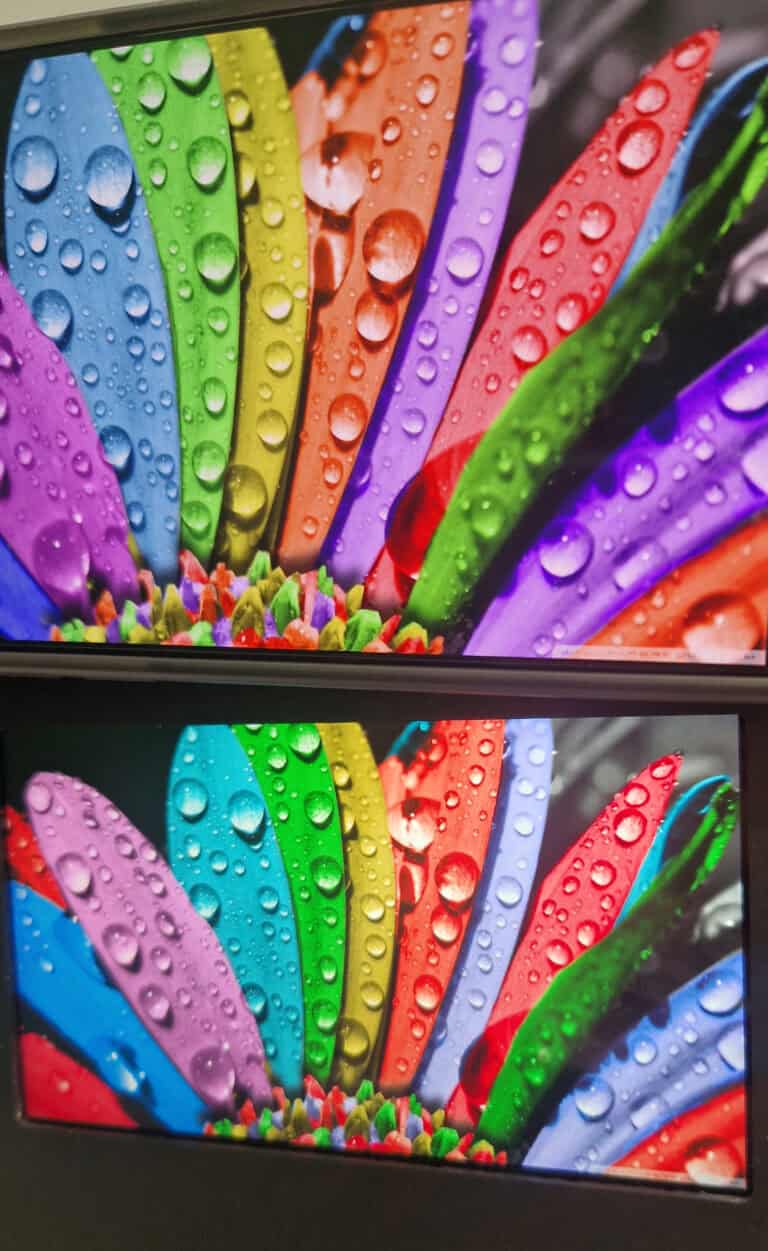
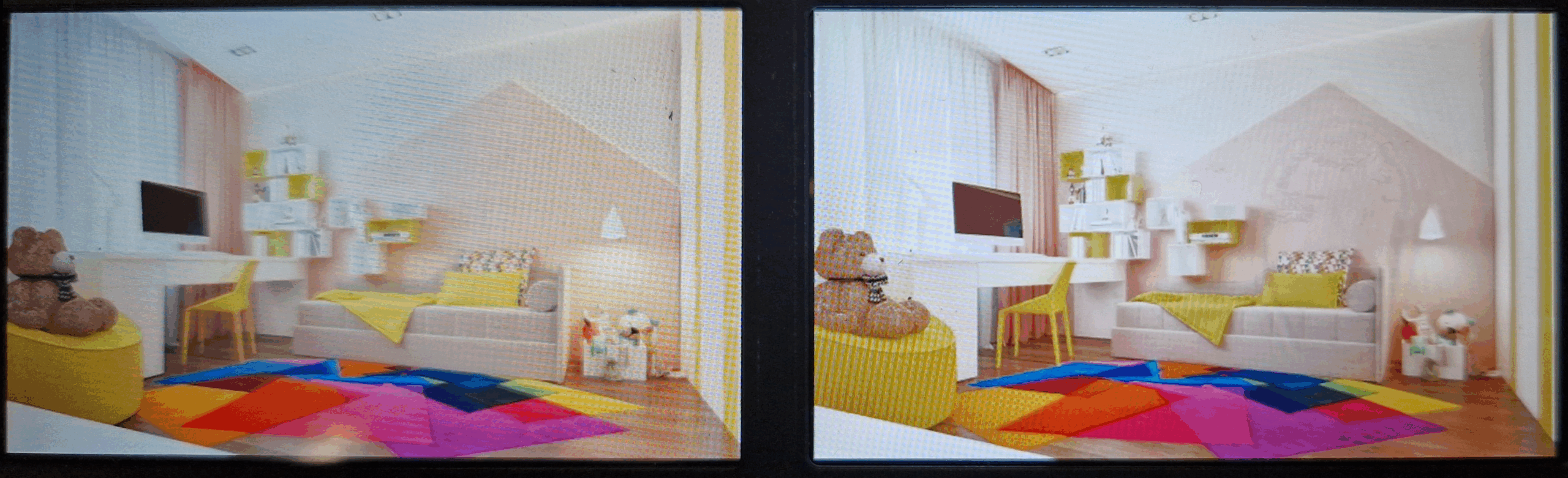
The white subpixel 'dilutes' color representation in some scenes, as the color mixing process is altered. This can lead to less saturated colors, particularly in images with moderate brightness.
2. More Complex Color Calibration
The additional subpixel makes color processing more demanding. The display controller must determine when the white subpixel is actively engaged – without compromising color integrity.
3. Limited Color Reproduction for High-Quality Image Output
For applications requiring high color accuracy (e.g., graphical user interfaces, medical displays, professional image processing), RGB is generally the superior choice, as color information is not influenced by the additional subpixel.
Comparison RGB vs. RGBW
| Feature | RGB Panel | RGBW Panel |
|---|---|---|
| Subpixel Arrangement | R-G-B | R-G-B-W |
| Brightness | Standard | Increased under identical conditions |
| Power Consumption | Higher with white content | Lower with white content |
| Color Saturation | High | Slightly reduced |
| Color Fidelity | Very good | Limited for critical applications |
| Daylight Usability | Good (with high backlight) | Better |
| Calibration Effort | Low | Higher |
Conclusion – When to Choose Which Panel?
RGB panels are the optimal choice for applications demanding high color fidelity and saturation, such as graphical user interfaces, medical displays, or image processing systems.
RGBW panels, conversely, are ideal for products where energy efficiency and high brightness are paramount, such as portable devices, outdoor HMIs, or applications with a high white content in the display.