Transparent displays represent the latest trend in display technologies. They combine visual representation with transparency, opening up new possibilities in fields such as augmented reality, digital signage, and industrial visualization. By merging digital content with real-world environments, they offer a unique form of interaction and information presentation. The following article provides an overview of technologies such as transparent TFT, OLED, AMOLED, LED displays, and shutter LCDs, including their functionalities, technical characteristics, advantages and disadvantages, typical applications, and future prospects.
Technologies of Transparent Displays
1. Transparent TFT Displays
Transparent TFT-LCDs (Thin-Film-Transistor Liquid Crystal Displays) are based on the well-known LCD technology, where liquid crystals are situated between two glass plates. In transparent variants, a specialized layout is employed to enable limited transparency. However, for an image to be visible, the display absolutely requires backlighting, as TFTs do not generate light themselves.
Unlike conventional TFT modules with integrated LED backlighting, transparent variants lack this light source. Instead, the display is positioned in front of a brightly lit environment, typically a specially designed light box. This box provides the necessary external backlighting and is an essential component of the solution. Particularly in storefront or display case installations, the TFT display is mounted in front of the exhibited object, which is then intensely illuminated from behind. Only with this strong backlighting can image content become visible on the TFT. Without such a light source, the display remains dark, and the depiction is barely discernible.
Advantages:
- Proven technology with mature production processes
- Good resolution (up to Full HD or 4K)
- Diverse interfaces (HDMI, USB, LVDS, SPI, I2C)
- Relatively cost-effective
Disadvantages:
- Limited transparency (typically 5–15%) due to active structure
- Dependence on external, intense backlighting
- Limited viewing angles
2. Shutter LCDs (Passive-Matrix Technology)
Shutter LCDs are liquid crystal cells typically constructed with a passive matrix structure. They are not used for displaying images or videos, but rather for controlled light transmission regulation. By applying an electrical voltage, the polarization state of the liquid crystals is altered, causing the display to appear either transparent or opaque. This technology is employed in applications such as welder's protective eyewear, electronically switchable glass (smart glass), or privacy systems.
A typical application example is automatic welding protection filters: here, the shutter cell reacts instantaneously to the welding arc, automatically darkening within a few milliseconds (typically 0.1 to 1 ms). Such cells consist of multiple layers, including polarization filters, a liquid crystal layer, and usually a shock-resistant cover. The darkening level can be fixed or automatically regulated (e.g., DIN 9 to 13). Even without activation, these cells provide permanent UV and IR protection. They are predominantly used in automatic welding helmets and welding booth windows, offering high comfort and safety.

Advantages:
- Simple structure without an active matrix
- Very high light transmittance in the transparent state
- Fast response time to sudden brightness (e.g., electric arc)
- Permanent UV/IR protection even in the inactive state
Disadvantages:
- No image or color display
- Only two states: transparent / opaque
3. Transparent OLED / AMOLED Displays
Organic Light-Emitting Diodes (OLEDs) consist of organic semiconductor layers that generate light when electrically stimulated. In transparent OLEDs, the emissive layer is applied to a transparent substrate. The structure between pixels remains transparent, making content appear to float in space. A significant advantage is that no backlighting is required.
AMOLED (Active Matrix OLED) utilizes an active matrix of TFTs for individual pixel control. This enables high resolutions, fast response times, and brilliant colors. The technology is particularly appealing for premium applications, such as in shop windows, trade fairs, or design installations.
However, the selection of transparent AMOLEDs is currently very limited. Primarily, very large screen diagonals (e.g., >50 inches) are available, which, due to their cost and dimensions, are almost exclusively suitable for professional digital signage or architectural projects. Small to medium sizes (e.g., 7″ to 21″) are currently scarcely available as transparent AMOLEDs.
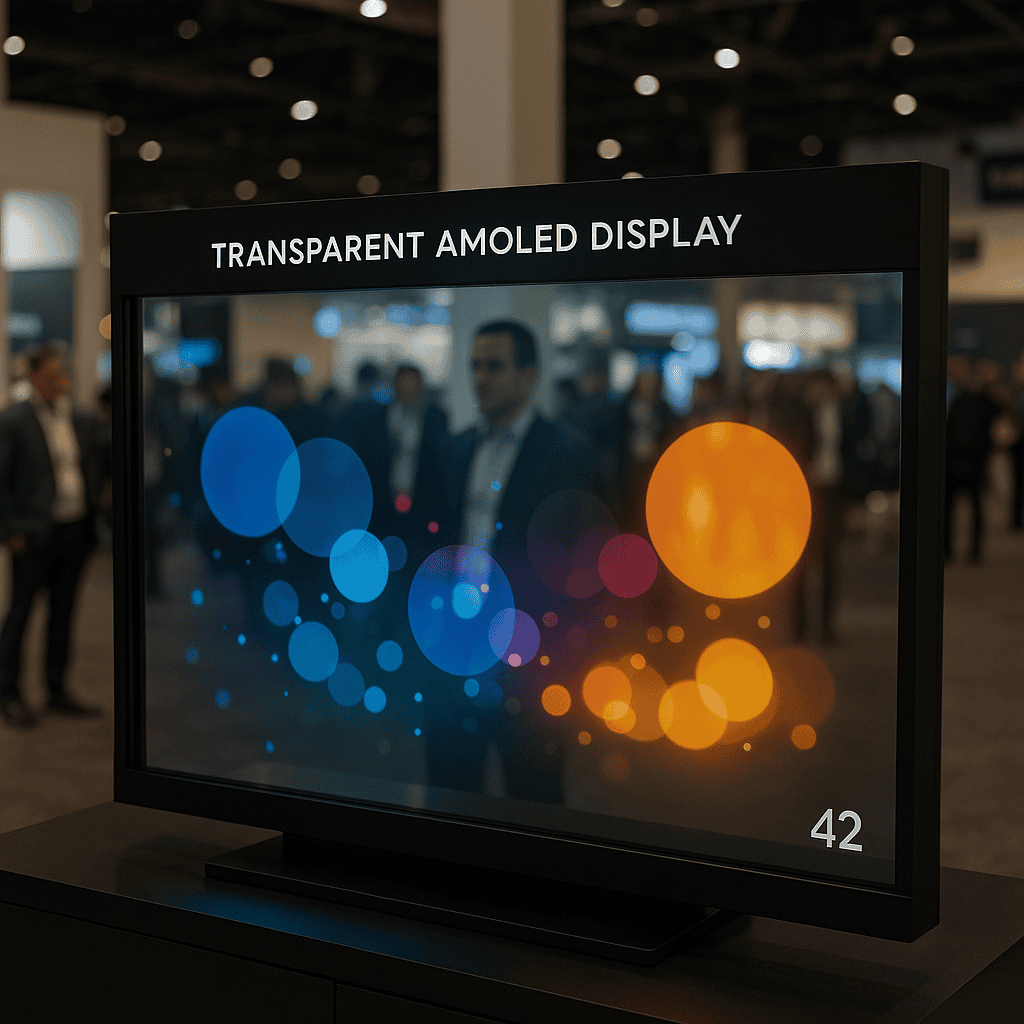
In addition to AMOLED, transparent passive OLEDs also exist, typically offered in small formats (e.g., 0.5″ to 5″). These are used, for instance, in head-up displays, wearables, or specialized indicators. However, they have a simpler technological structure and do not offer comparable image quality to AMOLEDs.
Another significant disadvantage is the price: Transparent OLEDs are considerably more expensive than other display technologies, which currently limits their use in cost-sensitive series products. Furthermore, the lifespan for certain colors (especially blue) is reduced, and the risk of burn-in effects is increased.
Advantages:
- High degree of transparency (30–40%)
- Excellent color reproduction and contrast
- Very wide viewing angle (nearly 180°)
- Low profile and no backlight required
Disadvantages:
- High cost
- Limited size selection (typically only very large or very small)
- Limited lifespan (especially blue pixels)
- Prone to burn-in with static content
4. Transparent LED Displays
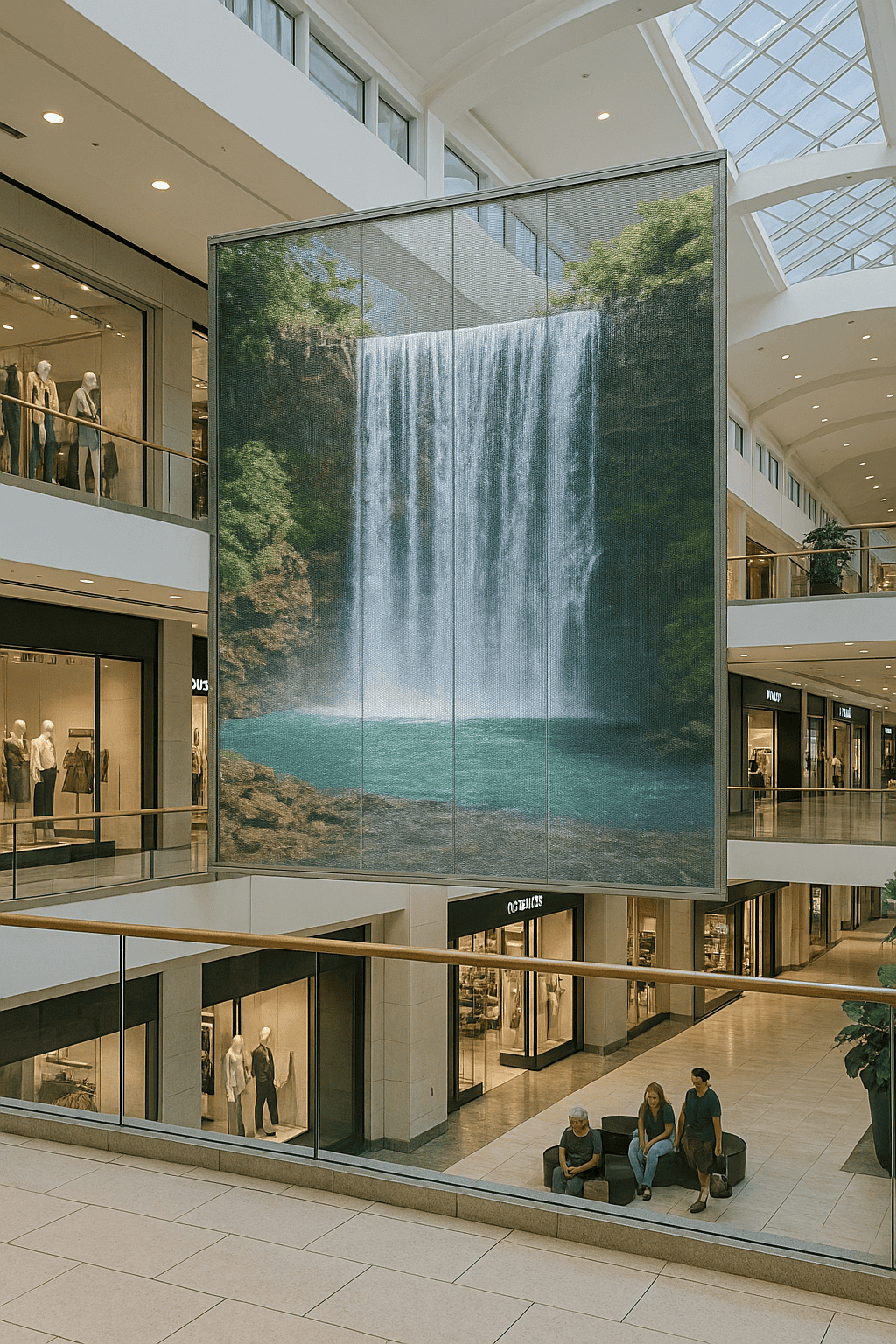
These displays consist of discrete, individually addressable LEDs mounted on a transparent substrate (e.g., a grid structure made of glass or acrylic). Since the LED elements are spatially distributed, a significant portion of the surface remains transparent.
Transparent LED displays are primarily designed for large-format applications such as building facades, shop windows, or stage backdrops. Due to their comparatively large pixel pitch, they offer lower resolution than OLED or TFT. However, when viewed from a greater distance, this is not a disadvantage, which is why this technology is particularly suitable for content intended to be perceived from several meters away.
Advantages:
- Very high brightness (up to 6000 nits or more)
- Excellent visibility even in direct sunlight
- Particularly suitable for large-scale video wall and facade applications
- Long lifespan (typically >50,000 hours)
Disadvantages:
- Low resolution (depending on pixel pitch)
- Visible grid structure when viewed up close
- Complex mechanics and installation
Technical Features Comparison
| Feature | TFT-LCD | Shutter-LCD | OLED / AMOLED | LED (Video Wall) |
|---|---|---|---|---|
| Transparency | 5–15% | >80% | 30–40 % | 30–70 % |
| Backlight | required (external) | optional | no | no |
| Colors | good | not displayable | excellent | medium |
| Resolution | high | limited | very high | low |
| Brightness | medium (depending on light box) | translucent | medium | very high |
| Viewing Angle | restricted | irrelevant | very wide | medium |
| Touch Integration | possible | not relevant | possible | not relevant |
| Cost | Cost-effective | Cost-effective | high | very high |
Typical Applications of Transparent Displays
Digital Signage:
- Interactive Shop Windows
- Product Presentations with Overlaid Information
- Video Walls for Events and Architecture
- Augmented Reality:
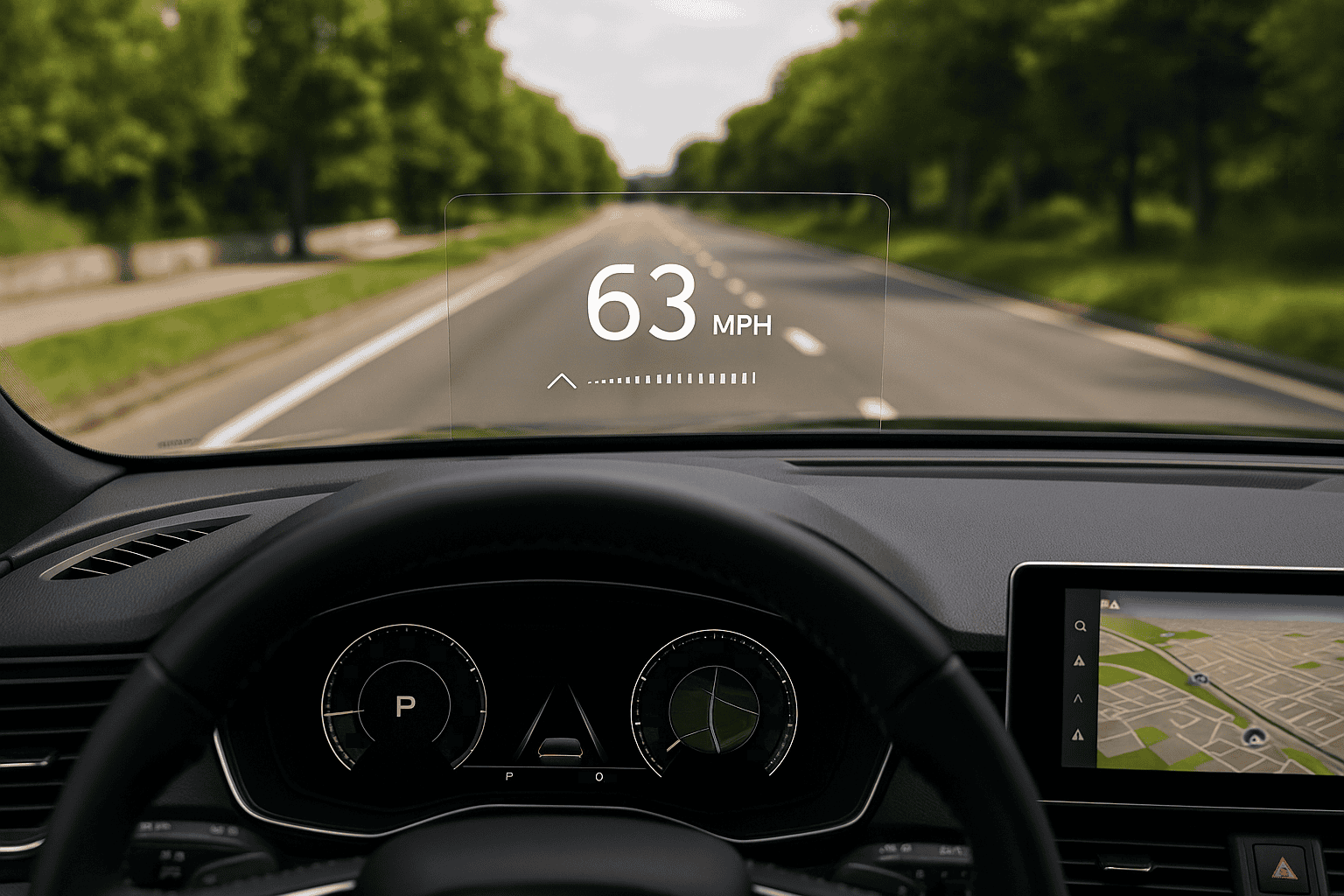
- Head-up Displays (e.g., in vehicles or cockpits)
- Smart Glasses and Wearables
- Industry and Mechanical Engineering:
- Control Panels Offering Insight into Production Processes
- Visualization of Real-time Data on Transparent Surfaces
- Building Integration and Design:
- Smart Glass Partitions (Shutter LCDs)
- Interactive Desks or Conference Tables
- Medicine and Research:
- Transparent Information Displays for Laboratory or Operating Room Applications
- Automatically Tinting Privacy Solutions (e.g., operating room areas)
Future Perspectives
Transparent displays integrate digital communication with spatial design and real-world perception. With the ongoing advancement of materials, manufacturing technologies, and control solutions, they are poised to penetrate an increasing number of application areas.
Future Technology Trends:
- Flexible Transparent Displays (e.g., film-based)
- Integration with Touch, Sensor Technology, and AI
- Improved Transparency and Energy Efficiency
Transparent displays are not a gimmick but a functional technology of increasing relevance. The choice of technology should always be based on the specific application scenario. TFT is suitable for simple visualizations in combination with appropriate external lighting, OLED for high-quality applications with demanding optical requirements, LED for large-area, striking content, and shutter LCDs for applications where switchable transparency is crucial. With increasing adoption, prices and production volumes are also expected to become more attractive – providing a significant impetus for new HMI concepts, innovative display solutions, and pioneering products.