TFT displays are no longer merely visible components on control panels or within monitor housings. In modern applications, they are increasingly integrated invisibly – concealed behind mirror glass, printed plastic panels, or translucent decorative surfaces. This technology is not only aesthetically appealing but also functionally advantageous in sectors such as Smart Home, medical technology, and industrial control panels.
How do hidden TFT displays work?
The basic principle: An active TFT module is positioned behind a semi-transparent cover – for example:
- Two-way mirrors (semi-transparent mirror glass)
- Translucent acrylic or polycarbonate panels
- Printed cover glasses with defined apertures
- Special films with neutral light transmittance
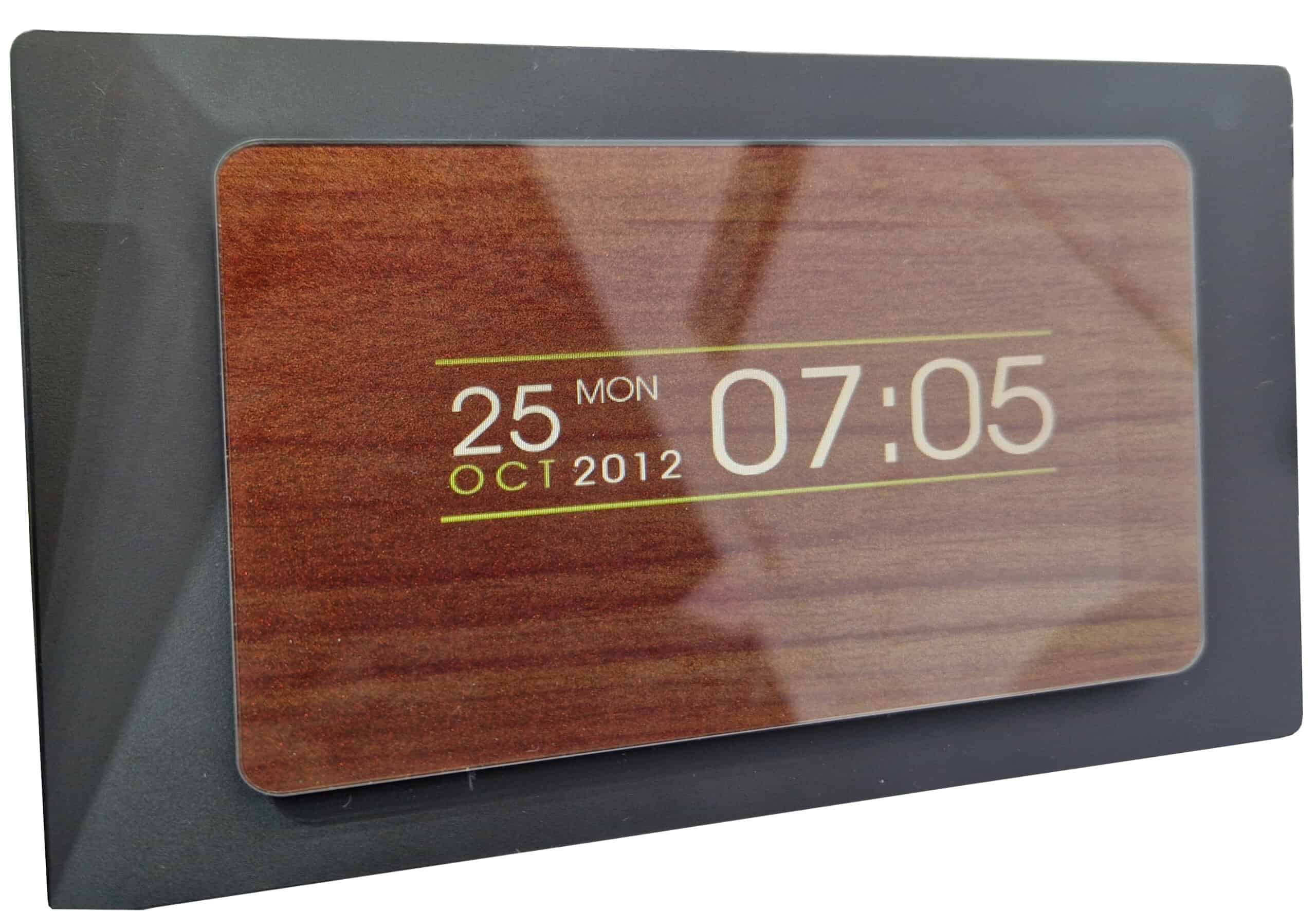
When the TFT is switched off, the surface appears homogeneous – either as a mirror, a completely opaque surface, or a printed panel, depending on the material. Only when an image is actively displayed does the light from the display “penetrate” the cover and become visible. Crucial to this is the correct combination of TFT brightness, cover material, and distance.
Technical Challenges
The implementation of hidden TFT displays poses several requirements for display selection and overall design:
- TFT Brightness: Standard displays are often insufficient. Models with high luminance (>500 cd/m², often >1000 cd/m²) are required to maintain visibility through the cover.
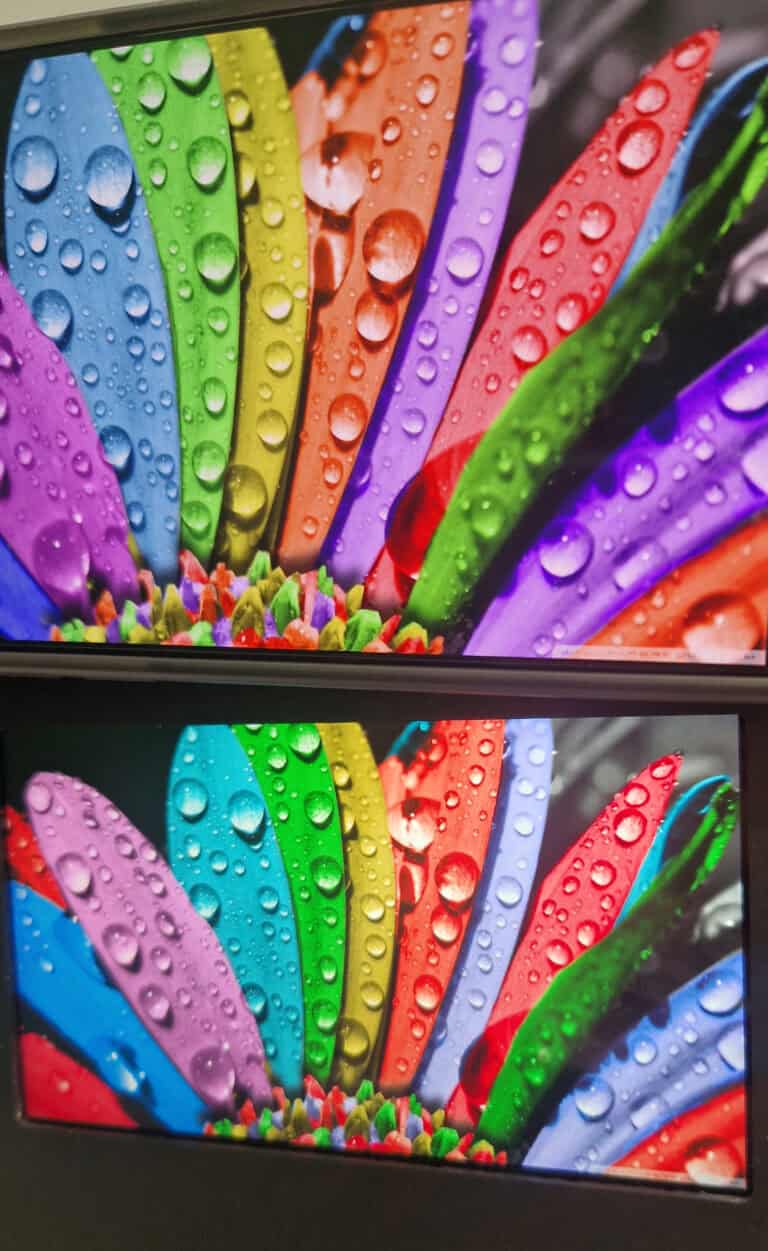
- Color Fidelity and Contrast: The additional optical layer alters color representation and black levels. Optical simulations and tests with reference samples are beneficial here.
- EMC and Thermal Management: The enclosed construction, lacking ventilation openings or mechanical buttons, necessitates meticulous thermal planning and EMC-compliant design.
- Touch Integration: Capacitive touchscreens function effectively even through thin glass or films, but require appropriate calibration – especially for mirrors with metallic coatings.
Typical Applications
- Mirror displays in bathrooms or hospitality settings
- Concealed status indicators in household appliances
- Multifunctional control panels with decorative surfaces
- Design-oriented HMIs in automotive or furniture manufacturing
These solutions enable a minimalist, modern aesthetic without visible technology – a crucial criterion in design-driven industries.
Implementation with LCD Mikroelektronik
Hidden TFT solutions can be implemented effortlessly with LCD Mikroelektronik. As an experienced display specialist, the company offers individual consultation, feasibility analyses, and customized modules – including adjusted brightness, touch integration, and optical covers such as mirror glass or printed cover glass. This results in elegant and functional solutions, perfectly tailored to design, technology, and application requirements.