The Underestimated Alternative to OLED
Brief summary
- VA LCDs do not suffer from burn-in and are ideal for static displays over many years
- High supply reliability and long-term availability make them perfect for industrial projects
- Cost-effective & flexible – customizable even for small quantities
Reading time: 5 minutes
OLED displays impress with their brilliant colors, perfect blacks, and impressive viewing angles. So it's no wonder that they are often the first choice when developing new products.
However, the industrial sector often has different requirements than the consumer market. Here, the focus is on reliability, long-term availability, and safe operation over many years. The question, therefore, is not just, “Which display looks best?” but rather, “Which technology is best suited to the application in the long term?”
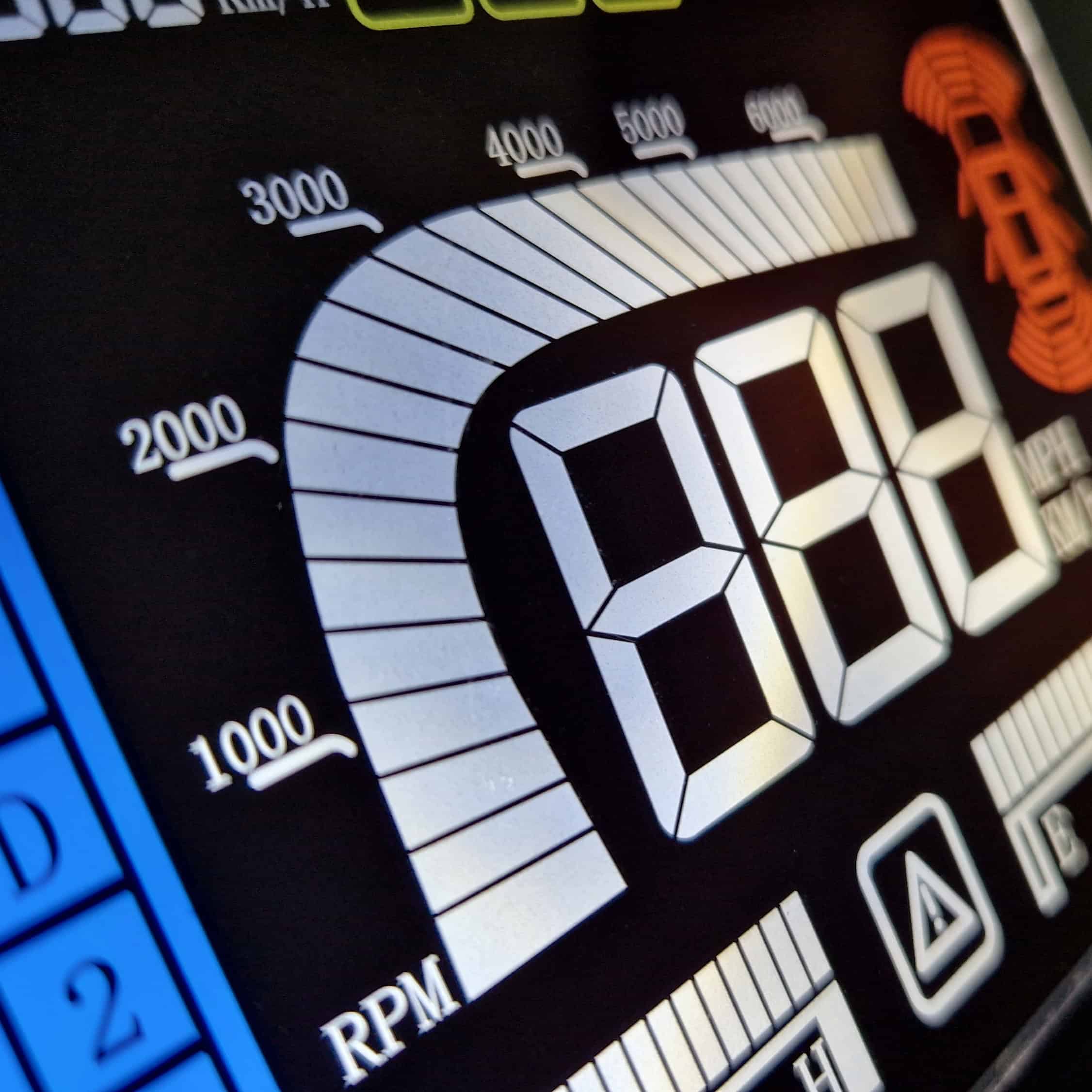
That is exactly why many developers deliberately choose a vertical alignment LCD (VA LCD).
OLED – Impressive Picture Quality with Clear Strengths
OLED is one of the most advanced display technologies. Because each pixel emits its own light, it produces a nearly perfect black level. Colors appear exceptionally vivid, and contrast and color reproduction remain virtually unchanged even at extreme viewing angles.
Another advantage: Since no backlighting is required, OLED displays can be made exceptionally thin.
OLED really showcases these strengths, especially in high-end consumer products or applications with sophisticated graphical user interfaces.
Why Industrial Applications Have Different Requirements
Many industrial devices serve their users for ten, fifteen, or even twenty years. Machines, laboratory equipment, building automation systems, and medical technology are often used daily and display the same information over long periods of time.
For developers, therefore, other questions come to the forefront:
- Will the display remain the same even after several years?
- Will this technology be available in the long term?
- Will the display still be available even after many years?
- Is it possible to produce custom designs cost-effectively?
This demonstrates that a VA LCD offers significant advantages in many projects.
No burn-in—ideal for static displays
One of the biggest differences between OLED and VA-LCD becomes apparent during long-term use.
OLED displays can develop what is known as a "burn-in" effect when content is displayed continuously. In this process, individual areas age at different rates, which can result in permanently visible afterimages.
For smartphones, this risk is often low because the image content is constantly changing. However, the situation is different in industrial applications that use static symbols, status indicators, or information that is displayed continuously.
Vertical Alignment LCDs do not exhibit this effect. Static images can be displayed continuously without causing image retention. This is a significant advantage, particularly for control panels, measuring instruments, and control systems.
Viewing Angle: OLED Remains Superior Here
Of course, OLED also has clear technical advantages.
Thanks to self-illuminating pixels, the image remains consistent from virtually any viewing angle. Colors and contrast hardly change at all, and the image tilt typical of LCD technologies does not occur.
Although modern Vertical Alignment LCDs achieve high contrast ratios and significantly improved viewing angles compared to traditional TN displays, OLED remains technically superior in this regard.
In many industrial applications, however, this difference is hardly noticeable, since the display is primarily viewed from the front.
VA-LCD vs. OLED – Technical Comparison
| criterion | VA-LCD | OLED |
|---|---|---|
| Contrast | High (typically 1,000–5,000:1) | Very high (nearly infinite) |
| Black Level | Very good | Perfect |
| Viewing Angle | Good | Excellent |
| Burn-in | ❌ No burn-in | ⚠️ Possible with static images |
| Service life | Very high | Limited by organic materials |
| Security of Supply | High (broad range of manufacturers) | Limited (few providers) |
| Customization | High (even for small quantities) | Limited / expensive |
| Cost | Cost-effective | Higher |
Security of supply is an often underestimated factor
Long-Term Availability and Security of Supply
A display is often specified for the entire life cycle of a product. In the industrial sector in particular, this can span ten years or more.
The market for OLED displays is dominated by a relatively small number of manufacturers. Changes to product portfolios or product discontinuations can therefore have a significant impact on ongoing developments.
In contrast, there is a wide range of manufacturers available for custom VA LCDs. This helps ensure the long-term viability of projects and reduces dependence on individual suppliers.
This reliability of supply is a crucial factor for many companies—especially when spare parts and continued production must be guaranteed even many years later.
Custom Displays, Even in Small Quantities
Another advantage of VA-LCDs is their flexibility.
Custom displays can be developed even for relatively small quantities. Segment arrangements, symbols, logos, or complete layouts can be tailored precisely to the specific application.
This makes vertical alignment LCDs particularly well-suited for mechanical engineering, medical technology, building automation, and measurement and control technology—fields in which standard displays are often insufficient.
Not every application needs the latest technology
When choosing a display, the decision is rarely based on which technology is more advanced. Rather, the key factor is which solution best meets the requirements of the specific application.
OLED impresses with its excellent picture quality and exceptional viewing angles.
Vertical Alignment Displays, on the other hand, offer features that are often more important in industrial settings: no burn-in, high long-term stability, supply reliability, custom designs even for small quantities, and reliable availability throughout the entire product lifecycle.
OLED and Vertical Alignment LCD are not competing technologies—they meet different needs.
While OLED shines wherever the highest image quality and widest viewing angles are required, the VA display is particularly well-suited for long-lasting industrial products with static displays.
Those who take the entire product life cycle into account as early as the development phase therefore often make a conscious decision to choose a VA-LCD. After all, the best choice isn’t necessarily the most cutting-edge technology, but rather the one that functions reliably for many years and remains available in the long term.
Decision-Making Checklist
Use VA-LCD if the following apply:
- ☐ The display remains unchanged for a long time
- ☐ Product lifespan > 5 years
- ☐ High level of supply security required
- ☐ Custom display required
- ☐ Cost optimization is important
You should opt for OLED if:
- ☐ Content that changes frequently is displayed
- ☐ Design and visual quality are the top priorities
- ☐ Wide viewing angles are crucial
FAQ
OLED is superior, but VA-LCD offers more than enough contrast for most industrial applications.
Often 10–20 years or longer, depending on the manufacturer and design.
Yes. If content is displayed unchanged for a long time, permanent burn-in may occur.
Yes. Custom segment and symbol displays are often economically feasible even for relatively small quantities.

Note: We use artificial intelligence to assist with content creation. All subject-matter content, technical statements, and editorial review and approval are handled by our experts.